Is Quality Sleep Actually Possible During Travel?
If you’ve ever woken up groggy after a night in a hotel, you’re not alone. Between unfamiliar beds, hallway noise, and travel stress, getting quality sleep on the road can be tough.
But sleeping well in hotels isn’t luck — it’s a skill you can train. Here’s how to sleep in hotels naturally, recover faster, and feel more energized for your next day on the road.
Control the Light — Your Sleep Switch
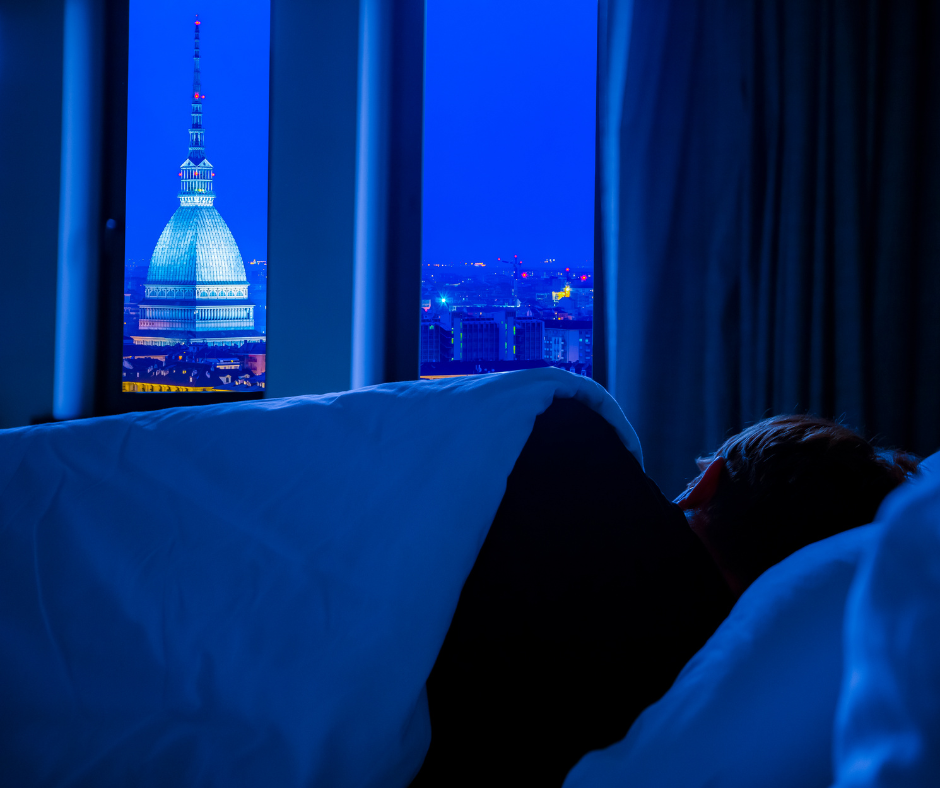
Light is the most powerful signal to your body’s internal clock.
- Block artificial light: Bring a soft eye mask or use a small towel to cover blinking electronics or gaps in the curtains.
- Mimic natural rhythms: Dim your phone or laptop screen an hour before bed, and open the curtains in the morning to let natural light reset your body clock.
Pro Tip: When booking, request a room away from bright signage or parking lots.
Block the Noise Before It Starts
Hotel noise is one of the biggest disruptors to quality rest.
- Pack earplugs or noise-canceling earbuds. Foam earplugs can block up to 30 decibels of sound.
- Use white noise: Apps or travel-size sound machines can mask hallway chatter or elevator dings.
- Choose your room wisely: Higher floors and rooms away from ice machines or elevators are usually quieter.
If you’re wondering how to sleep in hotels naturally, quiet equals calm — protect your peace.
Make the Bed Work for You
Every mattress and pillow setup feels different. Here’s how to make it work:
Check pillow firmness: Most hotels stock both soft and firm pillows — don’t be afraid to call the front desk for extras or replacements.
Use layers: If the bedding is too warm, remove the thick duvet and sleep under the sheet only. If it’s too cold, add a spare blanket from the closet.
Travel with comfort: A small pillowcase from home can make an unfamiliar bed feel familiar.
Set the Temperature for Deep Sleep
Your body sleeps best in a slightly cool room — around 65–68°F (18–20°C).
Lower the thermostat 30 minutes before bed.
Avoid blasting dry air directly at your face.
If you can’t control the thermostat, sleep in breathable fabrics like cotton or bamboo.
Pack Your Sleep Kit
A little preparation can transform your hotel sleep experience. Add these items to your Healthy Traveler Sleep Pack:
- Eye mask
- Earplugs or white noise device
- Travel pillowcase
- Magnesium supplement (check out the recommended Earthley topical magnesium in our travel vitamins and minerals article, or herbal tea (for natural relaxation)
- Blue-light-blocking glasses
- Portable humidifier (great for dry hotel air)
Keep it all in a small pouch so you can grab it every trip.
Maintain a Bedtime Routine — No Matter Where You Are
Your body loves routine. Even when time zones change, simple rituals signal it’s time to wind down.
Try this 15-minute travel sleep routine:
- Shut down electronics and dim lights.
- Stretch or do a few deep-breathing exercises.
- Sip caffeine-free tea or take a few slow sips of water.
- Write down tomorrow’s key tasks — clear the mind.
- Get into bed and visualize a relaxing scene.
Doing this consistently tells your body, “It’s time to rest,” even in a new environment.
Choose Hotels That Support Recovery
Some hotel brands are getting serious about sleep — offering blackout curtains, upgraded bedding, and even circadian-friendly lighting.
When you book, look for:
- Fitness-focused or wellness-oriented hotels (often found in our Hotel Gym Database)
- Rooms that mention quiet floors or wellness features
- Amenities like herbal teas, sound machines, or humidifiers
Recover Naturally — No Pills Needed
Instead of reaching for a sleep aid, try natural methods:
- Magnesium glycinate or L-theanine can promote calm without grogginess.
- Chamomile or valerian tea before bed encourages relaxation.
- Gentle yoga or meditation slows the nervous system and helps you drift off naturally.
If you’ve been searching for how to sleep in hotels naturally, start here — calm routines and mindful choices make all the difference.
Become a True “Hotel Athlete” Sleeper
Better sleep when traveling means better focus, energy, and resilience.
Just like your workouts or meals on the road, great rest requires a bit of strategy and consistency.
Pack your essentials, prepare your space, and treat your recovery time like part of your training.
Need more on the art of sleeping during travel? Check out our article on why quality sleep makes all the difference for the road warrior.
Do you sleep well while traveling and want to share your specific strategies? Drop your thoughts to our Hotel Athlete community in the LOUNGE, or on LinkedIn, Instagram, Facebook, or YouTube!