Dumbbells Ranging 25 – 50 Pounds Supporting Your Goals
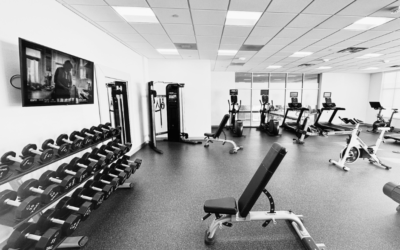
Most hotel gyms fall into one category:
They’re usable…
but limited.
You walk in and see:
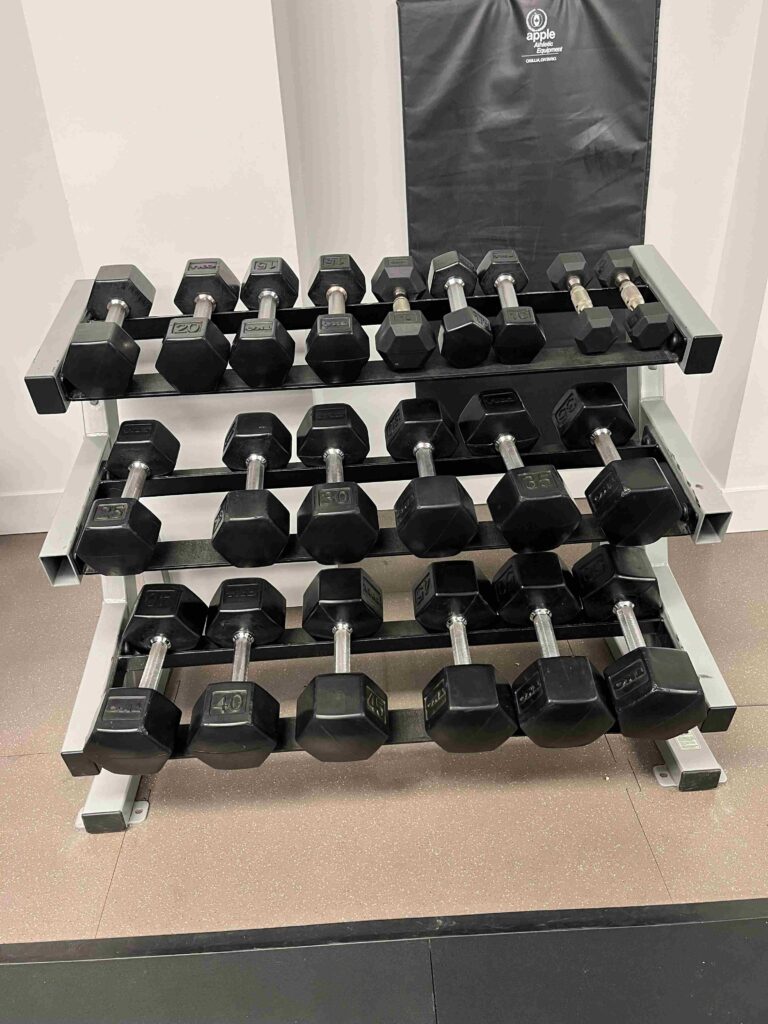
A dumbbell rack topping out at 40 or 50 pounds.
A bench.
Maybe a cable crossover.
A few cardio machines.
And immediately, most travelers think:
This isn’t enough.
So they either:
- Skip training entirely
- Default to random cardio
- Force a version of their home program that no longer fits the environment
And that’s where progress starts to slip.
But here’s the reality:
A Level 3–4 hotel gym is enough to maintain—and often improve—your training while traveling.
If you know how to use it.
What Is a Level 3–4 Hotel Gym?
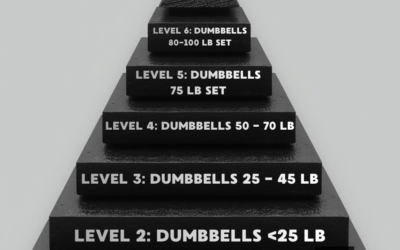
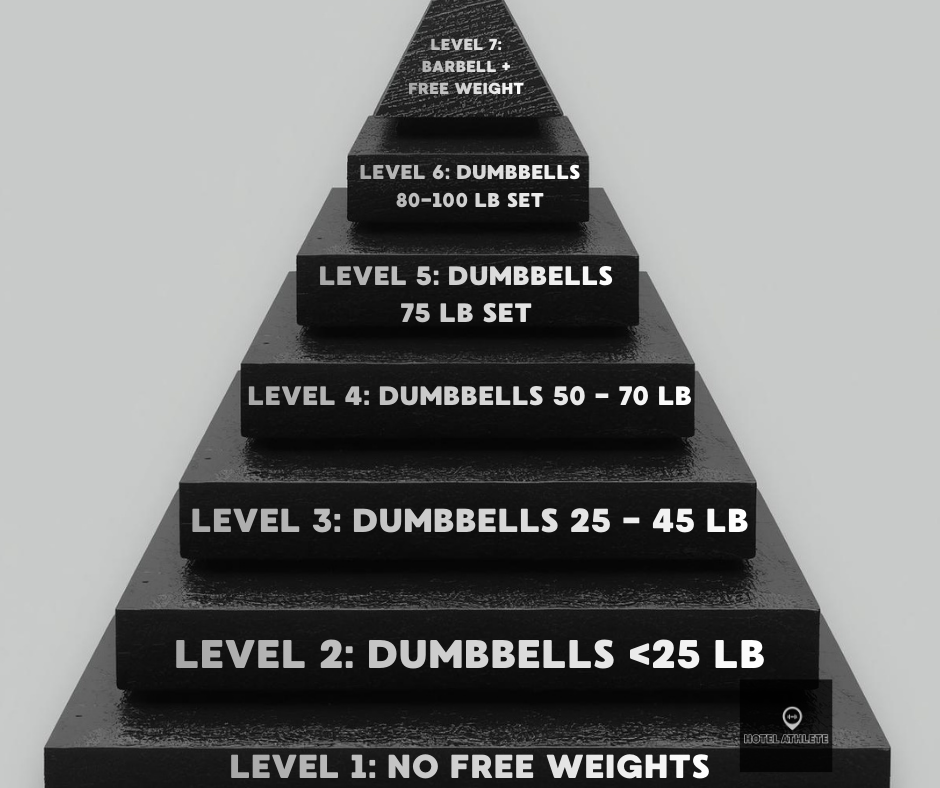
At Hotel Athlete, we evaluate hotel gyms based on Strength Levels—our system for measuring free weight training capacity.
Level 3
Dumbbells from 25–45 lbs
These gyms support:
- foundational strength work
- unilateral training
- moderate hypertrophy sessions
- deload weeks
They typically require more exercise creativity and tempo manipulation to stay challenging.
Level 4
Dumbbells from 50–70 lbs
Most commonly:
Dumbbells up to 50 lbs
This is one of the most common “solid business hotel” setups.
Level 4 supports:
- meaningful full-body strength sessions
- moderate-to-heavy unilateral work
- higher-quality progressive loading
- better exercise flexibility
For most travelers, this is more than enough to stay on track.
The Mistake Most Travelers Make
They try to train exactly like they do at home.
Same split.
Same movement selection.
Same loading expectations.
That doesn’t work.
Why?
Because travel changes:
- equipment access
- schedule flexibility
- recovery quality
- daily energy availability
Your training should reflect that.
This is where the PROF system matters most.
Perform What the Environment Allows
The goal is not to recreate your home gym.
It’s to execute an effective session using what’s available.
That means prioritizing:
- movement quality
- training density
- smart exercise pairings
- controlled intensity
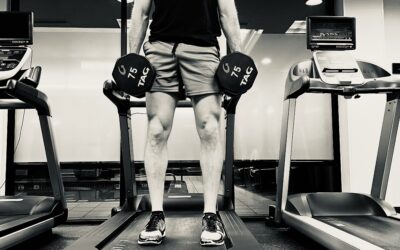
A 50-pound dumbbell may not be enough for your home deadlift.
But paired correctly?
It can absolutely create a productive lower-body training stimulus.
Reflect on Where Your Program Depends on Load
Travel reveals weak spots in programming.
Ask yourself:
- Which lifts only work because of heavy loading?
- Where am I relying on external load instead of movement quality?
- What patterns can be challenged differently?
This reflection matters.
Because if your entire program falls apart when weights get lighter…
your system isn’t flexible enough.
Optimize Exercise Selection
This is how Level 3–4 gyms become highly effective.
Instead of chasing heavier weight, increase challenge through:
1. Unilateral Training
Single-leg and single-arm work immediately increase difficulty.
Examples:
- Bulgarian split squats
- Single-leg RDLs
- Single-arm rows
- Offset carries
A pair of 50s becomes far more demanding when load is isolated.
2. Tempo Control
Slowing reps increases tension without adding weight.
Try:
- 3–5 second eccentrics
- pauses at the bottom
- controlled transitions
A 40-pound goblet squat feels very different with a 4-second descent.
3. Supersets
Pair movements strategically.
Examples:
Lower body + upper pull
Push + hinge
Core + unilateral stability
This increases training density and keeps sessions efficient.
Perfect for travel.
4. Range of Motion Challenges
Deeper ranges create more stimulus.
Examples:
- deficit split squats
- elevated push-ups
- deep goblet squats
More control.
More tension.
Less need for maximal loading.
Fuel Recovery Like Training Still Matters
Travel often disrupts:
- sleep quality
- hydration
- meal consistency
This changes performance fast.
Training well in a Level 3–4 gym means supporting recovery through:
- hydration before caffeine
- protein consistency
- intentional movement between long sitting periods
- prioritizing sleep whenever possible
The gym doesn’t determine progress alone.
Recovery does.
A Sample Level 4 Hotel Gym Workout
15–20 Minutes
Block A
Goblet Squat – 12 reps
Pull-Ups or Cable Rows – 10 reps
3 rounds
Block B
DB Floor Press – 12 reps
Single-Leg RDL – 8/side
3 rounds
Block C
Stability Ball Body Saw or Plank – 30–40 sec
Walking Lunges – 12/side
2 rounds
This works because it trains:
- lower-body strength
- upper-body pushing and pulling
- unilateral control
- core stability
No wasted movement.
No random cardio.
Just effective training.
The Truth About Progress on the Road
You do not need perfect equipment to maintain momentum.
You need:
- structure
- adaptability
- intention
A Level 3–4 gym won’t support every strength goal.
But it can absolutely support consistency.
And consistency is what protects long-term progress.
PROF Lens
Perform using what the gym allows
Reflect on where your plan depends too heavily on load
Optimize exercise selection and training density
Fuel recovery so your body adapts despite travel stress
Run the cycle.
Because the goal isn’t to train perfectly while traveling.
It’s to train well enough—consistently enough—that progress never stops.
Final Thought
Most travelers walk into a Level 3–4 hotel gym and see limitations.
Hotel Athletes see opportunity.
Because once you understand how to adapt…
you stop asking:
“Is this enough?”
And start asking:
“How do I make this work?”
That’s where real consistency begins.
Your next trip starts before check-in.
Search the Hotel Athlete database to find a gym that matches your training goals.
Ready to build a healthier travel system?
Explore the PROF Learning Center and start running the cycle.
Does your travel programming work well with Level 3 or 4 hotel gyms? Drop your thoughts to our Hotel Athlete community in the LOUNGE, or on LinkedIn, Instagram, Facebook, or YouTube!