Strength Training for Travelers
Modern science continues to confirm what the weight room has shown for decades: lifting weights doesn’t just build muscle — it slows down aging. Strength training helps preserve lean body mass, bone density, metabolism, and even cognitive function. The research is clear: resistance training is one of the most powerful tools for long-term health, longevity, and quality of life.
But what happens when your lifestyle involves constant disruption — early flights, unpredictable schedules, and hotel gyms that don’t quite measure up to your home setup? For many professionals, business travel feels like the death of consistency.
At Hotel Athlete, we believe that travel shouldn’t derail your progress — it should refine it. The key isn’t rigidity, it’s adaptability.

Why Strength Training Is Essential for Healthy Aging
As we age, we naturally lose muscle mass — a process called sarcopenia — which can start as early as our 30s. According to a 2019 review in the Journal of Strength and Conditioning Research, adults who consistently perform resistance training 2–3 times per week can completely offset or even reverse age-related muscle loss.
The benefits go far beyond strength:
- Improved insulin sensitivity and metabolic health
- Increased bone mineral density, reducing risk of osteoporosis
- Better posture, balance, and joint integrity
- Cognitive benefits from neuromuscular stimulation
- Elevated mood and stress resilience
In other words, lifting weights isn’t just for athletes — it’s a cornerstone of aging well.
So how do we maintain it when life — and travel — gets in the way?
Approach #1: The Home Base Heavy Lifter
If you travel midweek or only part of the month, your “bookends” — the days you’re home — are prime time for strength. This approach prioritizes:
- Heavy compound lifts (squat, deadlift, press, pull) while at home
- Hotel workouts focused on movement quality, mobility, and light strength
- Reduced decision fatigue by separating “build” days and “maintenance” days
Think of travel days as active recovery — not a break from training, but a shift in focus. A 20-minute mobility and core session in a hotel room can keep your movement patterns sharp, reduce stiffness from flying, and help you come home ready to lift heavy again.
Approach #2: The Road Warrior
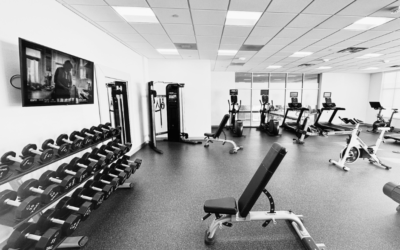
For those who travel Monday through Friday, hotel gyms become your arena. The goal is to train effectively with what’s available, not perfectly.
A smart plan includes:
- Bodyweight, unilateral, and isometric work for strength without heavy weights
- Tempo training and eccentrics to create time under tension and stimulate muscle growth
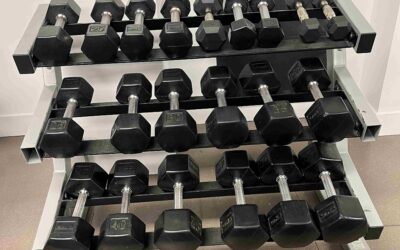
- Creative equipment use — dumbbells, cables, resistance bands, even luggage
Scientific literature supports this approach: a 2020 study in Sports Medicine found that training with lighter loads to near failure produces similar hypertrophy as heavy lifting. In other words, intensity and effort matter more than absolute load.
For travelers, this is great news. You can build and maintain strength anywhere — if you’re willing to adapt.
Approach #3: The Mobility-Minded Mover
Not every trip has to be about hitting PRs. For some, travel is the perfect window to focus on mobility, flexibility, and recovery — areas that often get neglected at home.
Use these windows to:
- Improve hip and thoracic mobility
- Reinforce core stability and posture after long flights
- Reset your movement foundation with yoga-inspired flows or corrective work
This approach also keeps you mentally engaged without the stress of chasing numbers. You’re still moving, improving, and investing in your long-term health — even if you’re not loading a barbell.
Adaptability Over Rigidity
Social media often glorifies perfect consistency — the 5 a.m. lift, the daily grind, the “no excuses” mindset. But for travelers, that ideal can be paralyzing. Travel is, by nature, a disruption. The goal isn’t to eliminate it; it’s to build resilience around it.
Adaptability is the new consistency.
A traveler who trains heavy at home, moves intelligently on the road, and plans with intention will make more long-term progress than one who burns out chasing perfection. The win is not in never missing — it’s in never quitting.
Building Your Plan: Practical Takeaways
Map your weeks: Identify when you’re home versus traveling and assign “heavy” vs. “maintenance” focuses accordingly.
Audit your hotel gyms: Use hotelathlete.com to find hotel gyms that match your training style and equipment needs.
Pack smart: Bring resistance bands, a jump rope, and a mobility ball. These can transform any space into a functional gym.
Stay flexible: Have a Plan A and Plan B for each day. If your flight gets delayed, shift to mobility or core work.
Keep your identity as a lifter: No matter where you are, remember — you lift not just to build muscle, but to build the ability to keep living strong.
Hotel Athlete Closing Thought
The science is clear: resistance training is medicine for aging. The mindset is clear: adaptability is strength.
If you can combine the two — structured lifting and flexible planning — you can maintain and even progress your fitness no matter how often you travel.
Travel doesn’t have to break your rhythm. It can redefine it.
What is your method for keeping up a weight training program while also balancing travel? Drop your thoughts to our Hotel Athlete community in the LOUNGE, or onLinkedIn, Instagram, Facebook, or YouTube!