Why Predictability Disappears — and Your Nervous System Notices
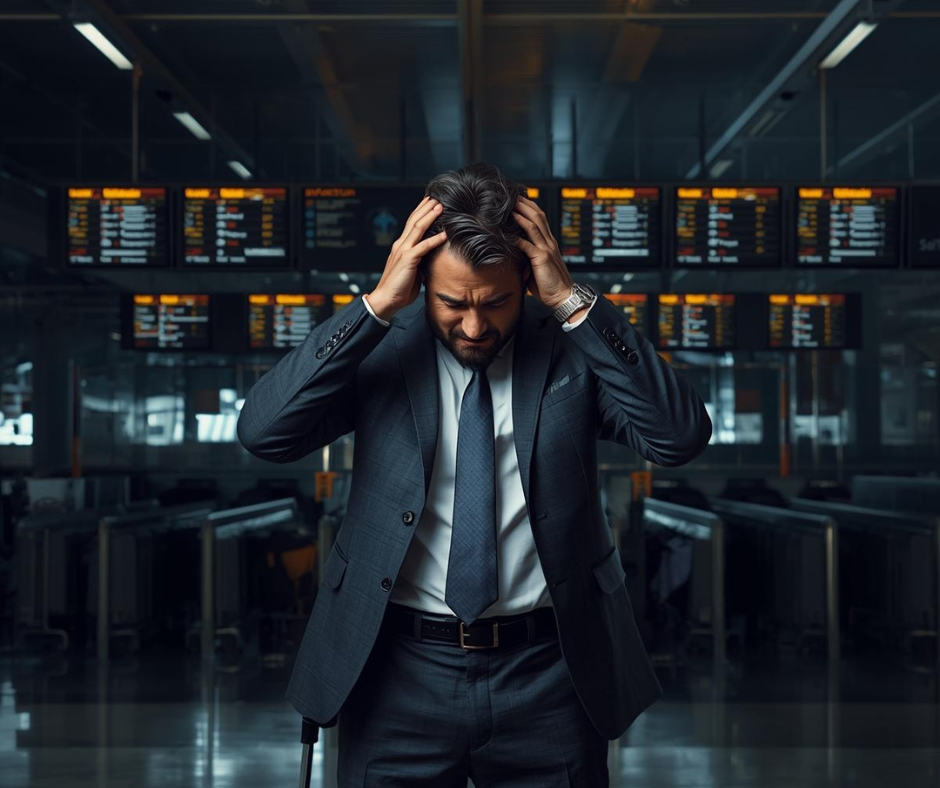
Frequent travel isn’t just physically demanding — it’s psychologically disruptive.
Even when everything goes “smoothly,” many travelers experience low-level tension: irritability in the airport, brain fog in meetings, restlessness in hotel rooms, or a subtle sense of disconnection. Over time, these small stress signals accumulate into travel anxiety, burnout, or emotional fatigue.
The good news? Travel stress isn’t a character flaw or a lack of discipline. It’s a physiological response to repeated unpredictability — and it can be trained.
Managing stress while traveling isn’t just about breathing exercises. It’s about understanding what’s happening in your nervous system and building small, portable regulation strategies that work anywhere.
Understanding the Micro-Stressors of Travel
Most travel stress doesn’t come from major disruptions. It comes from repeated micro-stressors.
These include:
- Constant background noise (airports, aircraft, hotels)
- Schedule uncertainty and time pressure
- Security lines and performance expectations
- Sleep disruption and time zone shifts
- Limited control over food and movement
- Social disconnection from familiar environments
Individually, these seem manageable. But your nervous system doesn’t evaluate them logically — it simply registers unpredictability.
Your brain prefers stability. Travel removes it.
This steady exposure to unpredictability can activate a mild but persistent stress response: elevated cortisol, hyper-alertness, shortened patience, and reduced emotional regulation. Left unchecked, this can evolve into chronic travel anxiety or burnout.
The key isn’t eliminating stress — it’s training your response to it.
Travel Anxiety Is a Regulation Issue, Not a Weakness
Many high-performing professionals interpret stress on the road as a personal shortcoming:
- “I should handle this better.”
- “I travel all the time — why does this still bother me?”
- “Other people seem fine.”
But emotional health on the road is less about toughness and more about regulation capacity.
When you repeatedly disrupt sleep, environment, and routine, your regulation bandwidth shrinks. You become more reactive not because you’re incapable — but because your nervous system is taxed.
That means the solution isn’t pushing harder.
It’s building awareness and recovery into your travel rhythm.
Tools for Emotional Regulation While Traveling
Mindfulness for travelers doesn’t require long meditations or elaborate routines. It requires small anchors that restore a sense of control and awareness.
Here are practical tools you can implement immediately.
1. The Micro-Journal Reset
At the gate or in your hotel room, take two minutes to write:
- What’s within my control right now?
- What’s outside my control that I’m holding onto?
- One thing I can do in the next hour to feel grounded.
This shifts your brain from rumination to intentional action.
2. Reframing Travel Friction
Instead of:
“This delay is ruining my day.”
Try:
“This is unplanned time I can use intentionally.”
Reframing doesn’t deny frustration. It redirects energy toward agency.
3. Gratitude Anchors
When travel feels disorienting, choose one stable anchor:
- Access to movement
- A quiet hotel room
- The opportunity to see new places
- A productive meeting
Gratitude activates neural pathways that counterbalance stress hormones. It’s not toxic positivity — it’s nervous system recalibration.
Grounding Rituals You Can Do Anywhere
Emotional regulation doesn’t need to look obvious. Here are subtle, airport-safe grounding practices:
Box Breathing (Discreet Version)
Inhale for 4, hold for 4, exhale for 4, hold for 4.
Repeat for 2–3 cycles while seated.
Sensory Check-In
Silently identify:
- 3 things you can see
- 2 things you can hear
- 1 physical sensation
This pulls attention out of anxious thought loops and back into the present.
Post-Flight Reset Walk
After landing, walk for 5–10 minutes before checking email.
Movement metabolizes stress hormones and signals safety to the body.
Hotel Room Arrival Ritual
Before unpacking:
- Open curtains
- Adjust lighting
- Take 5 slow breaths
- Set one intention for the evening
This transforms an unfamiliar space into a regulated one.
Why Community Reduces Travel Isolation
One of the most underestimated stressors of frequent travel is subtle isolation.
Even when surrounded by people, travelers often feel disconnected from meaningful interaction. Over time, this can amplify emotional fatigue.
Community restores perspective.
Sharing wins, challenges, and small travel strategies with others who understand your lifestyle reduces cognitive load and normalizes the experience. It reminds you that stress on the road isn’t personal — it’s environmental.
Emotional health on the road improves when regulation isn’t a solo effort.
Training Calm Is a Skill
Just like physical training builds durability, emotional training builds regulation capacity.
Travel will always contain unpredictability. But with awareness, preparation, and small grounding rituals, you can reduce travel anxiety and manage stress while traveling more effectively.
Calm isn’t something you stumble into between flights.
It’s something you practice.
Join the Layover Lounge
If you’re navigating frequent travel and want a place to share strategies, challenges, and wins with others who understand the lifestyle, consider joining the Hotel Athlete Layover Lounge.
It’s a space focused on practical tools for staying resilient — physically and emotionally — on the road.
Because managing stress while traveling is easier when you’re not doing it alone.
Have you felt alone in the emotional emptiness that travel can promote? What grounding techniques were able to pull you back in? Drop your thoughts to our Hotel Athlete community in the FORUM, or on LinkedIn, Instagram, Facebook, or YouTube!