Travel Doesn’t Have to Stall Your Program
Maintaining your strength training routine while traveling is absolutely possible—even if you don’t have access to your usual rack, platforms, or full set of plates. The secret is understanding training principles, not relying on perfect equipment. Unilateral work, isometrics, and eccentric loading are three of the most powerful strategies for keeping your strength up on the road, and they translate seamlessly into hotel gyms – or even your room.
Whether you’re on a multi-city work trip or squeezing lifts between flights, the right approach ensures you don’t just “get by”—you continue progressing.
Why Strength Training Doesn’t Need a Full Gym
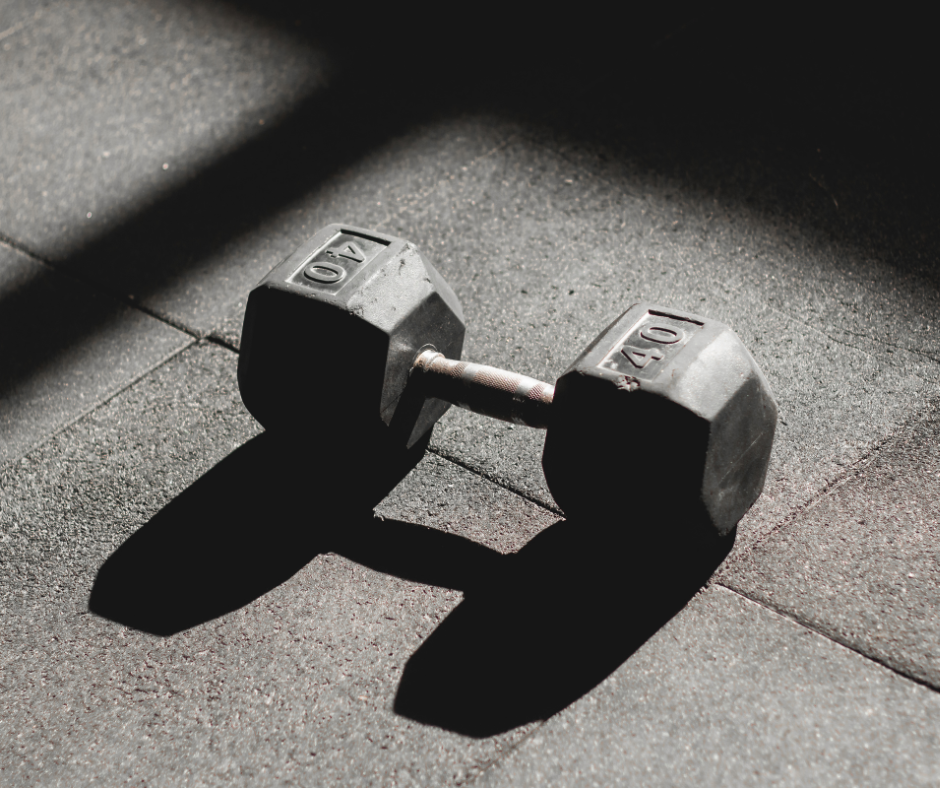
Travel often means unpredictability: hotel gyms with mismatched dumbbells, tiny spaces, and no barbells. But strength isn’t built only through heavy external load. It’s built through tension, mechanical stress, movement pattern consistency, and strategic progression.
Three methods allow you to continue progressing—no matter where you train:
- Unilateral Training (single-arm/leg work)
- Isometric Training (holds, pauses, and fixed-position tension)
- Eccentric Training (slowing down the lowering phase to increase strength stimulus)
Together, these allow you to challenge the body in ways that mimic or even exceed traditional bilateral strength training.
Unilateral Work: Your Travel-Friendly Strength Multiplier
Unilateral training is one of the most valuable tools for travelers because it allows you to create meaningful tension with limited external load.
Benefits include:
- Higher muscular demand with lighter weights
- Improved core stabilization when training in unfamiliar environments
- Balanced strength between sides, reducing injury risk
- Ability to “turn one dumbbell into a full workout”
- Similar muscle activation to bilateral lifts at significantly lower loads
Examples perfect for hotel gyms:
- Rear-foot elevated split squat (Bulgarian split squats)
- Single-leg RDL
- Single-arm dumbbell bench press
- Suitcase carries
- Lateral lunges
- Step-downs / Step-ups
Most hotel gyms have at least one pair of dumbbells. That’s all you need to get strong training one side at a time. Check out a Hotel Athlete upper body unilateral workout!
Isometrics: Strength Gains Without Needing Heavy Equipment
Isometrics are one of the most underrated—yet research-supported—methods for building and maintaining strength, especially when weight selection is limited.
Isometric training helps you:
- Maintain tendon stiffness and joint stability
- Build strength at specific sticking points
- Create high muscular tension with minimal equipment
- Reduce overall fatigue when traveling
Examples for travelers:
- Split squat isometric holds (massive quad stimulus)
- Glute bridge holds
- Plank variations with increased tension
- Push-up isometric bottom hold
- Row holds (pause and squeeze)
- Wall sits
You can make isometrics brutally effective even with a single dumbbell or just bodyweight. Check out this Hotel Athlete lower body isometric workout!
Eccentric Training: The Traveler’s Secret to Progressive Overload
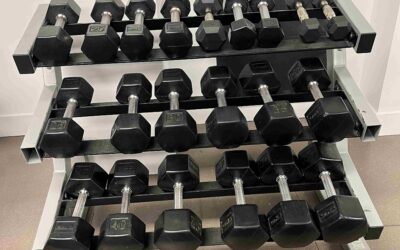
Eccentric loading—the slow, controlled lowering phase—creates the most mechanical tension and muscle fiber recruitment. When weights are light (hotel dumbbells usually cap at 40–60 lbs), extending the eccentric phase allows you to maintain or even increase training intensity.
Benefits:
- Builds strength with lighter loads
- Increases muscle fiber recruitment
- Supports tendon and connective tissue health
- Drives hypertrophy
- Proven to maintain strength even when volume or load decreases
Examples:
- 3–5 second lowering goblet squats
- Slow-eccentric push-ups
- 4–6 second eccentric RDL
- Eccentric chin-up/pull-up (every hotel gym with a bar should allow these – find your hotel with a pullup bar in our Hotel Gym Database)
- Tempo split squats
If you have 20–30 pound dumbbells + unilateral + tempo + isometrics? You can train at a very high level.
How to Evaluate a Hotel Gym Before You Book
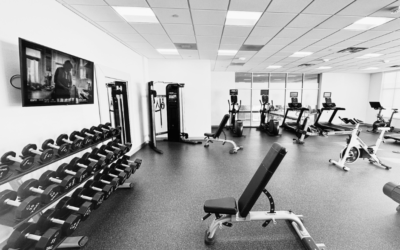
Finding the right hotel gym can make or break your ability to maintain programming—especially if you’re on a structured strength block or prepping for a test/competition.
What to look for:
1. Dumbbells up to 50–60 lbs or higher
This allows meaningful unilateral and eccentric loading.
2. A cable crossover machine or adjustable pulley
Wide range of pull, push, and accessory variations, plus most are equipped with a pullup bar.
3. A bench + open floor space
Essential for setup and unilateral work.
4. A pull-up bar (or Smith machine bar)
Huge versatility: pull-ups, rows, isometrics, eccentrics.
5. Bonus equipment that elevates the experience:
- Kettlebells
- TRX straps or suspension trainer
- Medicine balls
- Adjustable bench
- Treadmill for warm-ups or sled-push alternatives
A hotel gym doesn’t need to be a full downtown commercial gym—but it must offer enough to support meaningful strength sessions.
First stop in your hotel gym research: Hotel Athlete Hotel Gym Database – check out the equipment checklist and photos for layout. If you can’t find your hotel or get a full grasp of the setup, make a quick call to the hotel. Most are more than glad to provide additional information and even pictures/video.
When a Hotel Gym Isn’t Enough: Day Pass Strategy
Some trips require no missed days—especially if you’re following an 8-10 week progression, peaking for an event, or rehabbing an injury.
In these cases, researching local gyms with day passes becomes essential.
How to find them quickly:
- Google Maps → search “gym day pass” or “fitness center”
- Look for chains offering single-day or weekly passes
- Check ClassPass availability if you’re already subscribed
- Many CrossFit boxes allow drop-ins
- University recreation centers often sell day access to visitors
- YMCA locations are traveler-friendly and consistent nationwide
This allows you to continue your program uninterrupted—especially on heavy days where equipment truly matters.
If you can’t afford to break your structured cycle, a local gym is often the smartest, most reliable option.
Call your hotel ahead of time and see if they have any partnerships with nearby gyms. You may be surprised how many actually do, without advertising it! The Hotel Athlete database makes mention of these partnerships when the information is made available to us.
How to Adapt Your Program Without Losing Progress
Even with strong programming, travel creates limitations. But you don’t need to “start over” or run random workouts.
Here’s a simple way to adapt:
If weights are too light:
→ Add tempo (3–5 second eccentrics)
→ Add pauses/isometrics
→ Increase reps
→ Rotate unilateral variations
If equipment is limited:
→ Prioritize movement patterns: hinge, squat, push, pull, carry
→ Use bodyweight strength variations
→ Add tempo + unilateral work to increase difficulty
If time is short:
→ Pick 3–4 big movements and run them as a strength circuit
→ Use EMOM or AMRAP formats with controlled tempo
→ Keep rest short to increase intensity
If you’re doing a structured program:
→ Maintain the pattern (squat, hinge, push, pull, core)
→ Match relative intensity using tempo or unilateral loading
→ Save your heaviest days for when you’re home
Travel weeks can actually make you stronger—forced variability improves joint balance, movement quality, and mental resilience. They can also keep you young – check out this article on why that may be the case!
Sample Full Body Strength Travel Session (Hotel Athlete Gym Version)
A. Warm-Up (3–5 min)
• Walk on incline or jog
• Mobility for hips + shoulders
• 10 slow eccentric push-ups
B. Strength Block
1. Rear-Foot Elevated Split Squat (Bulgarian)
3×8 each leg (3–4 sec eccentric)
2. Single-Arm Dumbbell Row
3×10 each (2 sec squeeze at top)
3. Eccentric Goblet Squat
3×8 (5-second lowering)
C. Accessory
Isometric Split Squat Hold – 30 sec each side
Glute Bridge Isometric – 30–45 sec
Suitcase Carry – 30–40 sec each side
Strength on the Road Is About Strategy, Not Perfect Equipment
A successful travel strength program isn’t about having your home gym—it’s about applying the right principles:
✔️ Unilateral training
✔️ Isometrics for stability + tension
✔️ Eccentric tempo work for overload
✔️ Choosing hotel gyms strategically
✔️ Using local day passes when needed
✔️ Maintaining movement patterns instead of chasing barbell loads
With the right mindset and a performance-driven plan, you can stay strong, stay consistent, and even continue progressing while traveling.
What does a travel week workout plan look like for you? Drop your thoughts to our Hotel Athlete community in the LOUNGE, or onLinkedIn, Instagram, Facebook, or YouTube!