
PROF Learning Center
Module 6: Fuel
Supporting Energy, Recovery, and Performance While Traveling
Travel places unique demands on the body.
Flights disrupt routines.
Schedules shift meal timing.
Food environments change dramatically.
Without a strategy, these factors can quickly reduce energy, impair recovery, and disrupt healthy habits.
The Fuel step of the PROF framework focuses on supporting your body so that you can continue performing effectively during travel.
Fuel includes more than just food. It also involves:
• hydration
• recovery
• sleep support
• energy management
The goal is not perfection.
The goal is maintaining stable energy and recovery so that travel does not derail your progress.
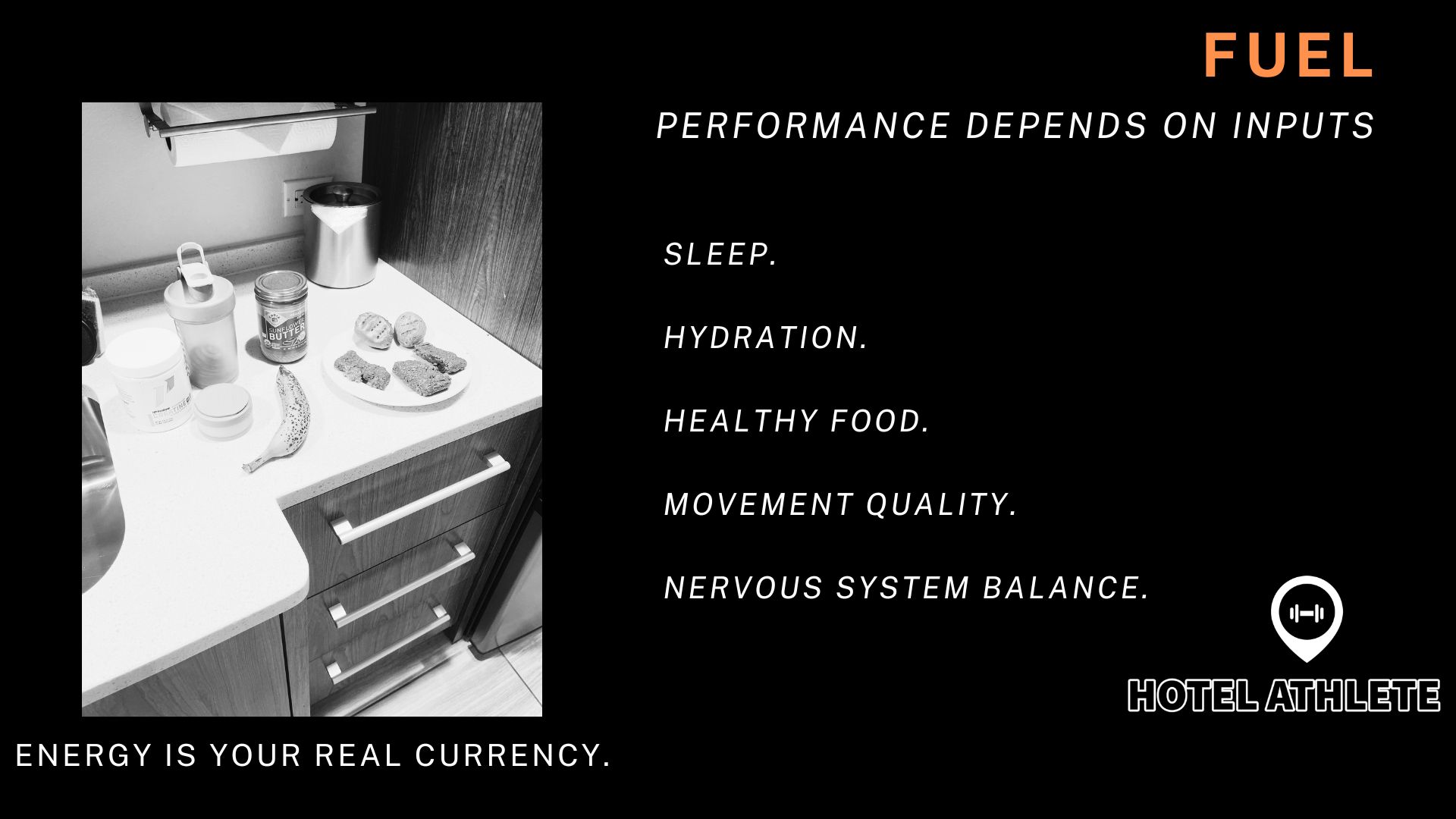
Section 1 — Fuel Is About Energy, Not Just Calories
Many people think of nutrition only in terms of calories or weight management.
But when traveling, the more important focus is often energy management.
Meals provide the fuel your body needs to:
• support workouts
• maintain focus during meetings
• recover from long travel days
• regulate sleep
When fueling is inconsistent, energy levels become unpredictable.
This is why successful travelers aim for consistent fueling patterns rather than perfect meals.

Reflection
Think about your last trip.
When did your energy feel lowest?
Morning
Afternoon
Evening
What might have contributed to that drop in energy?
Write your answer:
_________________________________________
Section 2 — Prioritize Protein and Nutrient Density
When food options are limited, one simple principle can improve travel nutrition dramatically:
Prioritize protein and nutrient-dense foods.
Protein supports:
• muscle recovery
• satiety
• stable energy levels
It is also the nutrient that travelers most often consume too little of.
When possible, aim to include protein with each meal.
Examples include:
Eggs
Greek yogurt
Chicken
Fish
Tofu or tempeh
Beans and legumes
This simple strategy supports both energy and recovery.
Homework
Think about your most common travel meals.
Which meals currently contain protein?
Breakfast
Lunch
Dinner
Which meal would benefit most from adding more protein?
Write your answer:
Section 3 — Hydration: The Overlooked Travel Performance Factor
Air travel and busy schedules often lead to unintentional dehydration.
Cabin air on flights is extremely dry, and long travel days can disrupt normal hydration habits.
Even mild dehydration can reduce:
• concentration
• physical performance
• energy levels
A simple guideline during travel is to drink water regularly throughout the day, especially during flights.
Adding electrolytes during long travel days can also support hydration.
Simple Hydration Strategy
Try the Travel Hydration Rule:
Drink a full glass of water:
• after waking
• before each meal
• after flights
This creates consistent hydration without needing to track exact amounts.
Reflection
During your last trip, did you feel dehydrated (dry mouth, fatigue, headache)?
☐ Yes
☐ No
☐ Not sure
What strategy could help improve hydration next trip?
Section 4 – Smart Travel Snacking
Travel days often include long periods between meals.
Without preparation, this can lead to:
• overeating later
• relying on low-quality airport food
• energy crashes
Simple travel snacks can prevent this.
Examples include:
Protein bars
Mixed nuts
Fruit
Greek yogurt
Jerky
Protein shakes
These foods are portable, filling, and widely available.
Packing a few snacks before leaving home can dramatically improve food choices during travel.
Exercise
Before your next trip, pack two travel snacks.
Write your choices:
Snack 1:
Snack 2:
Section 5 — Fueling for Different Travel Environments
Travel environments vary widely.
Your nutrition strategy should adapt to where food is coming from.
Common travel food environments include:
Airport food
Restaurants near hotels
Grocery stores
Hotel room food options
Instead of relying on perfect meals, focus on building balanced meals within each environment.
Example:
Airport meal:
Protein source
Whole grain or carbohydrate
Fruit or vegetables
Restaurant meal:
Lean protein
Vegetables
Balanced carbohydrate
Grocery meal:
Prepared protein
Fresh produce
Simple sides
The goal is flexible structure, not rigid rules.
Interactive Exercise
Think about your next trip.
Where will most of your meals come from?
Breakfast:
Lunch:
Dinner:
What is one strategy you can use to improve those meals?

Section 6 — Sleep: The Foundation of Travel Recovery
Sleep is one of the most powerful forms of recovery.
Unfortunately, travel often disrupts normal sleep patterns due to:
• early flights
• time zone changes
• unfamiliar environments
• late dinners or work schedules
Even small improvements in sleep can dramatically improve:
• energy levels
• mood
• workout performance
• recovery
Instead of expecting perfect sleep, focus on supporting sleep where possible.
Examples include:
Maintaining consistent sleep times when possible
Limiting caffeine late in the day
Getting natural light in the morning
These simple habits help your body adapt more quickly during travel.
Reflection
What most commonly disrupts your sleep during travel?
Early flights
Late work schedules
Hotel environment
Time zones
Write your answer:
Section 7 — Recovery Habits That Support Travel Performance
Recovery during travel is often overlooked.
Long flights, sitting, and disrupted routines create physical stress that accumulates throughout a trip.
Small recovery habits can make a meaningful difference.
Examples include:
Walking after flights
Light mobility work in hotel rooms
Short stretching sessions
Gentle movement between meetings
These habits support circulation, mobility, and overall recovery.
Recovery does not need to be time-consuming.
Even 5–10 minutes of movement can help your body reset during travel days.
Homework
Choose one recovery habit to try during your next trip.
Examples:
Morning mobility
Evening stretching
Walking after dinner
Write your choice:
_________________________________________
Section 8 — Fuel Supports the Entire PROF System
Fuel supports every step of the PROF framework.
Without proper fuel and recovery:
• workouts become harder
• recovery slows
• energy fluctuates
When fueling is intentional, the entire system functions better.
Balanced nutrition, hydration, sleep, and recovery habits support:
Performance
Consistency
Energy
Long-term health
The goal of Fuel is not perfection.
The goal is building simple habits that help your body handle the demands of travel.
Reflection
Which area of fueling could improve most during your travel?
☐ Nutrition
☐ Hydration
☐ Sleep
☐ Recovery habits
What is one change you will try on your next trip?
_________________________________________
Module 6 Key Takeaways
Fueling supports energy, recovery, and performance during travel.
Key principles include:
• prioritize protein
• stay consistently hydrated
• prepare simple snacks
• adapt nutrition to travel environments
• give high emphasis on sleep habit and environment
• schedule short recovery sessions into your days
These strategies allow you to maintain stable energy and better recovery, even when travel schedules are unpredictable.
Module 6 Quiz
Protecting and stabilizing your energy
Test your understanding of the Fuel step in the PROF cycle.
What Comes Next
You’ve now completed the core PROF framework.
You understand how to:
Perform during travel
Reflect on your experiences
Optimize your strategies
Fuel your body for energy and recovery
The next step is applying these principles in more advanced ways.
In the upcoming modules, we’ll introduce tools and systems that help you build a fully personalized travel health strategy.
Next Module
Module 7: Travel Fitness Systems
Learn how to build repeatable workout systems that adapt to different hotel gyms, equipment levels, and travel schedules.
MODULES
Module 1 — The Travel Health Problem
Why traditional workout plans fail during travel.
Module 2 — The PROF Framework
Understanding the cycle that powers healthy travel.
Module 3 — Perform
How to train effectively in unpredictable environments.
Module 4 — Reflect
The fastest way to improve your travel routine.
Module 5 — Optimize
Small adjustments that dramatically improve travel health.
Module 6 — Fuel
Nutrition and recovery strategies for life on the road.
Module 7 — Travel Fitness Systems
Build repeatable workout systems that adapt to your environment.
Module 8 —
Choosing the Right Hotel Gym
A strategy to choosing your gym around your plan.
Module 9 — Travel Nutrition Systems
Creating repeatability and reducing decision fatigue.
Module 10 — Travel Recovery
The essential focal points to allowing your body to maintain its energy during travel.