
PROF Learning Center
Module 10: Travel Recovery
How to Improve Sleep, Reduce Stress, and Recover Faster While Traveling
Travel places a unique strain on your body and mind. Between disrupted schedules, unfamiliar environments, and constant movement, your sleep, recovery, and mental clarity can quickly decline.
The result? Lower energy, poor decision-making, reduced workout quality, and a harder time staying consistent with your nutrition and fitness goals.
This module provides a complete, actionable system to help you:
-Improve sleep quality in any hotel environment
-Use breathing techniques to manage stress in real time
-Maintain mental clarity and focus while traveling
-Build simple recovery habits that work anywhere
This is how you stay consistent, sharp, and in control, no matter where you are.
Section 1 — Understanding Sleep Health While Traveling
Why Sleep Health Matters More Than Sleep Duration
When most people think about sleep, they focus only on hours. But sleep health is much more than duration—especially while traveling.
Sleep health includes:
-
Sleep duration (total hours slept)
-
Sleep efficiency (time asleep vs. time in bed)
-
Sleep latency (how quickly you fall asleep)
-
Number of awakenings during the night
-
Perceived sleep quality
Even if you’re getting fewer hours while traveling, improving these factors can significantly enhance your recovery, energy, and mental performance.
Reflection
Which of these impacts your sleep most while traveling?
• falling asleep
• staying asleep
• waking up early
• overall quality

The Reality of Travel Sleep
Travel introduces several unavoidable challenges:
-
Different time zones
-
New environments (light, noise, temperature)
-
Changes in routine
-
Increased stress and stimulation
Because of this, your goal should not be perfect sleep.
Your goal is:
Consistently good enough sleep to support recovery and performance.
How Poor Sleep Impacts Travel Performance
When sleep quality drops, you may notice:
-
Increased cravings and poor food choices
-
Reduced motivation to train
-
Higher stress and irritability
-
Decreased focus and productivity
This is why sleep is the foundation of your entire travel system.
Homework
On your next trip:
Start building awareness by tracking:
-
How many hours you sleep
-
How you feel the next day
-
What disrupts your sleep
This awareness alone will help you make better decisions.
Section 2 — Building a Travel Sleep System
Create a Repeatable Sleep Routine Anywhere
The most effective travelers don’t rely on perfect conditions—they rely on systems.
Your travel sleep system should include three key components:
1. Control Your Environment
Your sleep environment has a direct impact on sleep quality.
Focus on:
-
Temperature: Keep the room cool when possible
-
Light: Use blackout curtains or an eye mask
-
Noise: Use white noise, a fan, or earplugs
These small adjustments can significantly improve sleep quality, even in unfamiliar hotel rooms.
2. Establish a Wind-Down Routine
A consistent pre-sleep routine signals your body that it’s time to rest.
Aim for 20–30 minutes of:
-
Light stretching or mobility work
-
Breathing exercises
-
Reduced screen exposure
This helps lower your heart rate and prepare your nervous system for sleep.
3. Use Consistency Anchors
Even if your schedule changes, maintain:
-
A consistent wake-up time (as close as possible)
-
A repeatable pre-sleep routine
These anchors help regulate your internal clock and improve sleep consistency.
Check out this 10 minute video on an end of the day “wind-down routine” by Dan Go.
Travel Tip
Even a simple routine like:
-
stretch
-
breathe
-
lights out
is enough to create meaningful improvements in sleep quality.
Reflection
Do you currently have a repeatable wind-down routine?
Homework
Build a simple 3-step night routine for your next trip.
Section 3 — Breathing Techniques for Stress and Recovery
Why Breathing Is a High-Impact Travel Tool
Your breathing directly influences your nervous system.
Fast, shallow breathing increases stress.
Slow, controlled breathing reduces it.
This makes breathing one of the most effective and portable recovery tools you have while traveling.
4-7-8 Breathing for Relaxation and Sleep
The 4-7-8 method is ideal for calming your body and preparing for sleep.
How to perform it:
-
Inhale through your nose for 4 seconds
-
Hold your breath for 7 seconds
-
Exhale slowly through your mouth for 8 seconds
Use this technique:
-
before bed
-
after stressful travel moments
-
when feeling anxious
Box Breathing for Focus and Control
Box breathing is commonly used to improve focus and manage stress.
How to perform it:
-
Inhale for 4 seconds
-
Hold for 4 seconds
-
Exhale for 4 seconds
-
Hold for 4 seconds
Use this technique:
-
before meetings
-
during travel delays
-
anytime you need to reset mentally
When to Use Breathing Techniques
-
On the plane
-
In your hotel room
-
Before important events
-
During high-stress situations


Reflection
When during travel do you feel most stressed?
Homework
Choose one breathing technique and use it daily during your next trip.
Consistency matters more than duration.
Section 4 – Mental Performance and Travel Mindset
Managing Mental Fatigue While Traveling
Travel introduces constant decision-making, stimulation, and disruption.
This leads to:
-
decision fatigue
-
reduced focus
-
mental exhaustion
Without a system, this can negatively impact both your performance and your health choices.
Simple Tools to Improve Mental Clarity
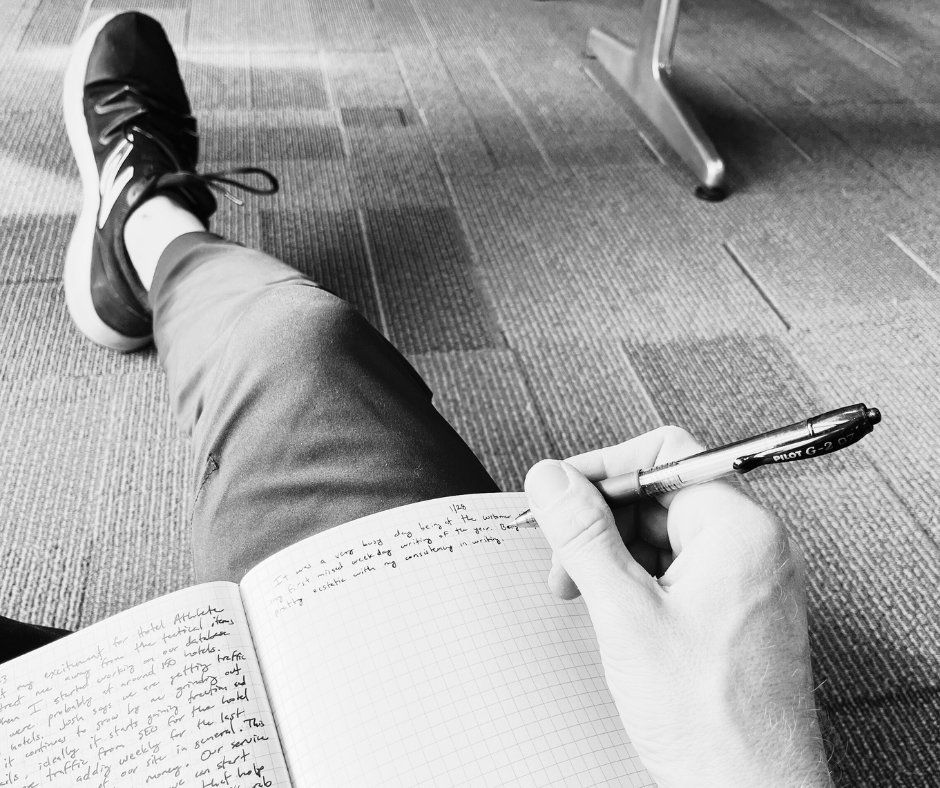
Journaling
Writing helps you:
-
process thoughts
-
reduce stress
-
stay focused on priorities
Even 5 minutes can make a difference.
Gratitude Practice
Taking a few minutes each day to reflect on positive moments can:
-
reduce stress
-
improve mood
-
shift your mindset
Reduce Passive Screen Time
Endless scrolling and constant screen exposure can increase mental fatigue.
Instead, use downtime intentionally:
-
read
-
reflect
-
think
Travel-Specific Insight
Flights are one of the few times you are forced to slow down.
Use this time for:
-
reflection
-
journaling
-
planning
This turns travel time into a mental reset, not just downtime.
Travel Tip
The plane is a rare opportunity for stillness
Instead of:
• movies
• endless scrolling
Try:
• reading
• journaling
• thinking
Reflection
How do you currently spend your downtime while traveling?
Homework
On your next trip, replace one screen session with:
• journaling
• reading
• reflection
Section 5 — Movement as a Mental and Physical Reset
Why Daily Movement Matters
Movement is not just for fitness—it’s one of the most effective ways to:
-
reduce stress
-
improve mood
-
increase mental clarity
Even light movement can significantly improve how you feel during travel.
Simple Travel Movement Options
-
15–20 minute walk outdoors
-
light mobility or stretching
-
short bodyweight workout
-
yoga flow
The Power of Getting Outside
Spending time outdoors provides:
-
fresh air
-
natural light exposure
-
improved mood and focus
Aim for at least 15 minutes per day, even on travel days.
Practical Strategy
Don’t overcomplicate this.
Your goal is simple:
Move your body every day, in any way possible.

Travel Tip
Get outside every day, including travel days.
Reflection
How often do you get outside while traveling?
If you made getting outdoors a priority, could you fit it into your travel schedule?
Homework
On your next trip:
Schedule 15 minutes of outdoor movement daily
Section 6 — Alcohol, Sleep, and Recovery
Understanding the Impact of Alcohol on Travel Performance
Alcohol is a common part of business travel and social situations.
However, it has measurable effects on:
-
sleep quality
-
recovery
-
hydration
-
decision-making
How Alcohol Affects Sleep
Even small amounts of alcohol can:
-
reduce REM sleep
-
increase nighttime awakenings
-
decrease overall sleep quality
This means you may sleep longer—but feel less recovered.
A Practical, Realistic Approach
This is not about eliminating alcohol.
It’s about understanding the trade-offs and making intentional decisions.
Hotel Athlete Strategy
If you choose to drink:
-
limit quantity
-
stay hydrated
-
avoid drinking close to bedtime
Why This Matters
Poor sleep leads to:
-
worse nutrition choices
-
lower energy
-
decreased performance
Managing alcohol intake helps maintain consistency across your entire system.

Reflection
How does alcohol impact your sleep while traveling?
Homework
On your next trip:
Track:
• alcohol intake
• sleep quality
Section 7 — Building Your Complete Travel Recovery System
Bringing It All Together
At this point, you have all the tools needed to build a complete recovery system.
Your system should include:
-
a simple sleep routine
-
breathing techniques for stress management
-
daily movement
-
mental reset practices
-
aligned nutrition habits
Example Travel Day Recovery Flow
-
Morning: light exposure + movement
-
Midday: breathing reset or walk
-
Evening: wind-down routine + reduced stimulation
The Goal
You are not trying to be perfect.
You are building a system that allows you to:
stay consistent in any environment
The Outcome
When these habits are in place, you will notice:
-
better energy throughout the day
-
improved focus and productivity
-
more consistent nutrition and training
-
faster recovery between travel days
Reflection
Do you feel stressed on travel weeks?
Does the stress come on before the trip, during, or after?
Recognizing your typical points of stress introduction can help you plan your stress management systems.
Homework
For your next trip:
Create a 5-10 minute routine for:
- Morning
- Midday
- Evening
These do not have to be complex. Easy to stick to routines will anchor your mind during stressful travel weeks.
Module 10 Key Takeaways
-
Sleep quality is more important than perfect sleep duration
-
Breathing techniques provide an immediate way to reduce stress
-
Daily movement supports both mental and physical recovery
-
Simple mental practices improve focus and reduce fatigue
-
Consistency—not perfection—is the key to success while traveling
Module 10 Quiz
Building Recovery Into Your Travel Routine
Test your understanding of recovery systems that can allow you to manage the stress of travel.
What Comes Next
You now have a complete system for:
-
training
-
nutrition
-
recovery
-
mental performance
The next step is simple:
Apply it.
Start small. Stay consistent. Adjust as needed.
Because success as a traveler isn’t about perfect conditions—
It’s about having a system that works anywhere.
MODULES
Module 1 — The Travel Health Problem
Why traditional workout plans fail during travel.
Module 2 — The PROF Framework
Understanding the cycle that powers healthy travel.
Module 3 — Perform
How to train effectively in unpredictable environments.
Module 4 — Reflect
The fastest way to improve your travel routine.
Module 5 — Optimize
Small adjustments that dramatically improve travel health.
Module 6 — Fuel
Nutrition and recovery strategies for life on the road.
Module 7 — Travel Fitness Systems
Build repeatable workout systems that adapt to your environment.
Module 8 —
Choosing the Right Hotel Gym
A strategy to choosing your gym around your plan.
Module 9 — Travel Nutrition Systems
Creating repeatability and reducing decision fatigue.
Module 10 — Travel Recovery
The essential focal points to allowing your body to maintain its energy during travel.