
PROF Learning Center
Module 2: The PROF Framework
A simple system for improving your health trip by trip
In Module 1, you learned why most wellness routines break down during travel.
It isn’t a lack of discipline.
It’s that traditional routines depend on stable environments, and travel removes those conditions.
The solution isn’t a perfect routine.
The solution is a repeatable system that adapts to changing environments.
That system is the PROF Framework.
PROF stands for:
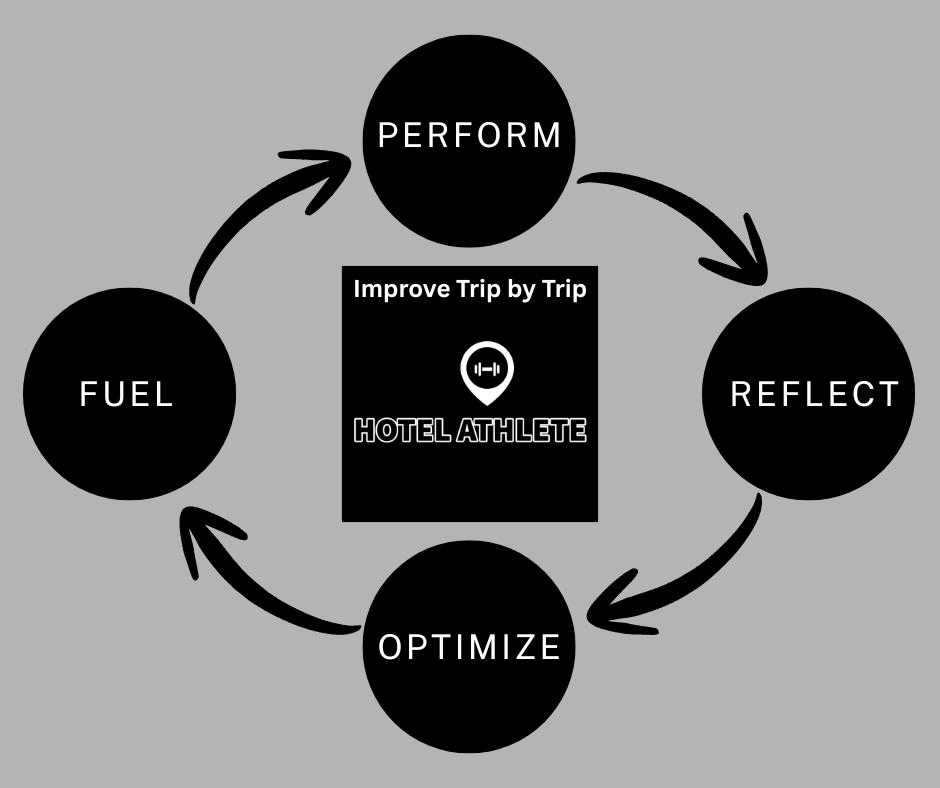
Perform → Reflect → Optimize → Fuel
Instead of chasing perfect travel habits, Hotel Athletes run this simple cycle every trip.
Each trip becomes an opportunity to learn, adjust, and improve.
Section 1 — Why Systems Beat Routines
Most people approach travel health with routines.
For example:
• “I always work out at 6am.”
• “I always eat a high-protein breakfast.”
• “I train five days per week.”
These routines can work well at home.
But during travel:
Flights change schedules.
Hotel gyms vary.
Meals become unpredictable.
Rigid routines break under these conditions.
Systems adapt.
A system asks different questions:
• What can I do with the time available?
• What equipment is available?
• How do I adjust if energy is low?
This shift—from rigid routines to adaptive systems—is the foundation of the PROF Framework.

Traveler Exercise
Think about your normal health routine at home.
Which parts depend heavily on stable conditions?
Examples might include:
• Access to specific gym equipment
• Cooking meals at home
• Consistent sleep schedule
• A predictable daily calendar
Now ask yourself:
Which one becomes hardest to maintain during travel?
Recognizing this helps you see why systems work better than routines when you’re on the road.
Section 2 — THE PROF Cycle
The PROF Framework is a continuous improvement loop.
Each part of the cycle serves a specific purpose.
Perform
Take action using the time, energy, and environment available.
This might mean:
• a 10-minute hotel workout
• a walk between meetings
• choosing balanced airport meals
The goal isn’t perfection.
The goal is taking action within real travel conditions.
Reflect
Notice what worked and what didn’t.
Reflection might include questions like:
• Did the workout improve your energy?
• Did the hotel gym support your routine?
• Did certain meals keep you full longer?
Reflection transforms travel from guesswork into learning.
Optimize
Use what you learned to make small improvements.
Examples:
• choosing a hotel with a better gym next time
• adjusting workout timing
• packing better travel snacks
Optimization happens between trips and between travel days.
Fuel
Support your body with recovery and nutrition.
Fuel includes:
• balanced meals
• hydration
• sleep
• mobility and recovery
Fuel ensures that each trip builds momentum rather than draining energy.
Interactive Activity
Build Your First PROF Cycle
Think about your next upcoming trip.
Write down one simple action for each step.
Perform
Example: 12-minute dumbbell workout in the hotel gym
Reflect
Example: Notice energy levels after the workout
Optimize
Example: Adjust workout timing the next morning
Fuel
Example: Choose protein-based breakfast at the airport
You’ve just created a simple PROF cycle for your next trip.
The cycle doesn’t need to be complicated.
It just needs to be repeatable.
Section 3 — The Power of Small Improvements
One of the biggest advantages of the PROF cycle is that it focuses on small improvements over time.
You don’t need a perfect travel routine immediately.
Instead, each trip becomes a chance to improve one small thing.
For example:
Trip 1
You discover the hotel gym is limited.
Trip 2
You pack resistance bands.
Trip 3
You book hotels with better gyms.
Trip 4
You establish a consistent travel workout.
Over time, small adjustments compound into a reliable travel health system.
Homework
Think about your last three trips.
What is one thing you learned from each?
Examples:
• certain airports have better food options
• morning workouts improve energy for meetings
• some hotels consistently have better gyms
These observations are the beginning of optimization.
Section 4 — PROF in the Real World
Let’s look at how a traveler might run the PROF cycle during a real trip.
Example scenario:
Day 1
Perform
10-minute hotel room workout after arrival
Reflect
Energy improved before evening meetings
Day 2
Optimize
Repeat the workout before breakfast
Fuel
Choose balanced breakfast with protein and fiber
Day 3
Perform
Quick mobility session before flight
Reflect
Noticed less stiffness during travel
By the end of the trip, the traveler has:
• stayed active
• improved energy
• learned what works
This is how the PROF cycle builds momentum across trips.
Traveler Exercise
Think about a typical two-day work trip you take.
How could you apply the PROF cycle?
Write down one example for each step:
Perform
Reflect
Optimize
Fuel
Your answers don’t need to be perfect.
The goal is simply to practice running the cycle.
Section 5 — Why the PROF Cycle Works
Your Last Trip Audit
The PROF cycle works because it mirrors how improvement actually happens.
Most successful systems follow the same pattern:
Action → Feedback → Adjustment → Support
In other words:
Perform → Reflect → Optimize → Fuel
Instead of trying to get everything right the first time, you improve trip by trip.
This makes travel health more sustainable and less stressful.
Quick Reflection
Think about one area of travel health where you struggle most:
• workouts
• nutrition
• sleep
• energy management
Which step of the PROF cycle could help most?
Perform
Reflect
Optimize
Fuel
This insight will guide your focus in the upcoming modules.
Module 2 Quiz
Understanding the PROF Framework
Take this short quiz to reinforce the key ideas from Module 2.
What Comes Next
Now that you understand the PROF cycle, the next modules will help you apply each step during real travel.
You’ll learn how to:
Perform
Take intentional health actions during travel — from hotel workouts and walking routines to movement breaks and simple nutrition decisions.
Reflect
Notice patterns in your energy, training, and recovery so each trip becomes a learning opportunity.
Optimize
Adjust your routines, travel planning, and environment to make healthy decisions easier.
Fuel
Support your performance with nutrition, hydration, sleep, and recovery strategies that keep you energized on the road.
Each step builds on the previous one so you can improve your health trip by trip.
Next Module
Module 3: Perform
Learn how to take intentional health actions during travel — including workouts, movement strategies, and simple nutrition decisions that keep you performing well on the road.
MODULES
Module 1 — The Travel Health Problem
Why traditional workout plans fail during travel.
Module 2 — The PROF Framework
Understanding the cycle that powers healthy travel.
Module 3 — Perform
How to train effectively in unpredictable environments.
Module 4 — Reflect
The fastest way to improve your travel routine.
Module 5 — Optimize
Small adjustments that dramatically improve travel health.
Module 6 — Fuel
Nutrition and recovery strategies for life on the road.
Module 7 — Travel Fitness Systems
Build repeatable workout systems that adapt to your environment.
Module 8 —
Choosing the Right Hotel Gym
A strategy to choosing your gym around your plan.
Module 9 — Travel Nutrition Systems
Creating repeatability and reducing decision fatigue.
Module 10 — Travel Recovery
The essential focal points to allowing your body to maintain its energy during travel.